
Blue Island Previous Residents by Era
A sound search for previous residents begins with the source closest to the date in question. Cook County systems identify the current parcel and carry the recorded title trail. Blue Island library and historical collections supply names tied to older address forms. The federal census adds household context, while maps show the building and street as they stood at a set date.
| Source | Local Years or Coverage | Where Held | What It Can Show |
|---|---|---|---|
| Recorded documents | Online database described as 1985 to present; records reach 1871 | Cook County Clerk | Deeds, parties, PIN, legal description, date, copy route |
| Blue Island directories | 1904, 1908, 1923–27, 1930, 1937–45, 1961; other 1921–22 and 1930–31 leads | Library, Newberry, microfilm leads | Dated names, businesses, addresses, roles |
| South Suburban criss-cross | 1966–1996 Newberry ranges; 1986 onward in a 1999 local inventory | Newberry and library inventory | Address-to-subscriber or householder leads |
| Sanborn and local maps | 1886, 1891, 1897, and 1975 sources located | Library, BIHS, Library of Congress | Street context, footprint, and mapped use |
| Federal census | Public schedules through 1950 | National Archives and libraries | Household and place context |
| News and obituaries | Runs have gaps; SSGHS obituary index 1919–69 | Library, INP, BIHS, SSGHS | Events, kin, dates, and later places |
For a recent property, begin with the parcel and recording index. For an early twentieth-century question, test the directory years nearest the event, then pair them with census and news. A nineteenth-century trail may need county books, IRAD, local histories, maps, and staff help because the web index is not the full archive.
Start Blue Island Previous Resident Search
A modern street address can shift, but the parcel identification number and legal description provide stronger links between county systems. Search the Cook County Assessor by exact house number, direction, unit, street name without its suffix, city, and CAPTCHA. The result may show parcel location, township, class, tax code, traits, values, exemptions, appeals, and a 14-digit PIN.
Cross-check the PIN in the Treasurer portal and CookViewer. Keep parcel location apart from the tax-bill mailing address. The mailing field may point to an owner, mortgage firm, agent, or other recipient and does not prove that person was one of the previous residents. CookViewer adds the parcel outline and helps test whether a split, merger, or nearby lot complicates the old trail.
Trace Blue Island Previous Residents in Deeds
The Cook County Clerk recording index holds the main title sequence for a Blue Island address. Its online database is described as covering 1985 forward, while recorded documents extend to 1871 across digital media, microfilm, books, and offsite originals. A failed image or missing web result is not proof that the deed is gone.
- Find the current PIN and legal description in the Assessor, Treasurer, or CookViewer record.
- Search the recording index by PIN first, then address. Preserve the latest deed's document number, date, type, parties, and copy status.
- Treat the seller as grantor on that transfer. Search the same person as an earlier grantee while holding the land key steady.
- Repeat the link. Check quit claim, warranty, trustee, transfer-on-death, correction, plat, annexation, and release types when the chain changes.
- When web coverage ends, give the last number and date to the Clerk and ask for the older index, film, book, or counter copy.
- Grantor and grantee
- The grantor transfers an interest; the grantee receives it.
- Chain of title
- The linked sequence of recorded transfers for the same land.
- Legal description
- Section, township, range, subdivision, block, and lot terms that identify land despite a street change.
- PIN
- Cook County's 14-digit parcel key used in tax, assessment, map, and recording work.
The index is free to search, though images and copies may cost money or require a counter visit. Recording help is at 118 N Clark Street, Room 120, Chicago, 312-603-5050, or clerk.recordings@cookcountyil.gov.
The advanced recording search displays the branches used for old title work.
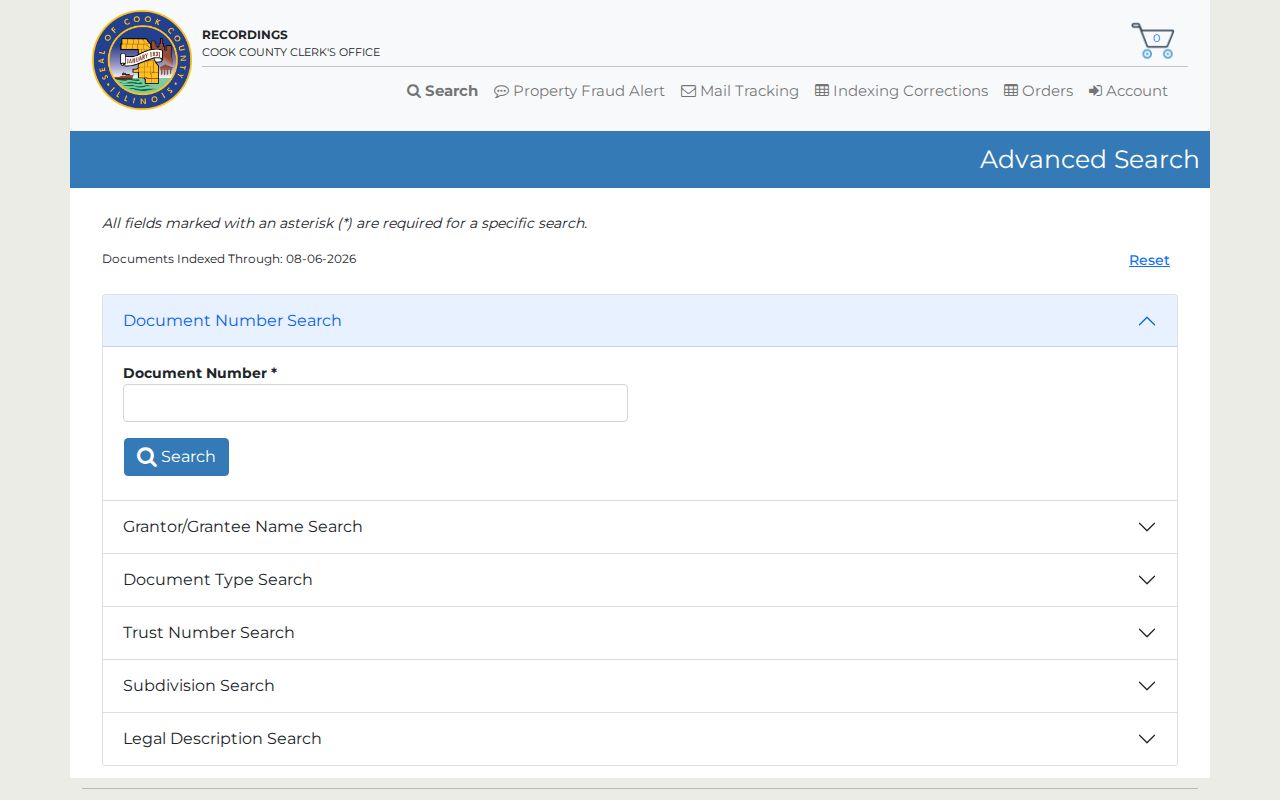
Its party, date, document-type, subdivision, and legal-description fields keep each step tied to the same land.
Translate Blue Island Previous Resident Addresses
Old numbers should not go straight into a modern county portal. The Blue Island Historical Society published a digitized 1929 table of revised street addresses and name changes. It has New and Old Name columns plus paired numbers. On West 119th Place, old 308 maps to new 2046, old 299 to new 2050, and old 298 to new 2051.
Read the table row by row. Do not guess a formula. Record the old form, new form, page, and any doubt before testing the result in USPS and CookViewer. A conversion can bridge an old directory entry to a present parcel, but it cannot show that the person stayed or that the same building survived.
Map Blue Island Previous Resident Homes
Sanborn maps can show footprint, material, use, and street setting at one date. A 1999 library inventory lists Blue Island film for 1886, 1891, and 1975. The Library of Congress catalogs an 1897 Cook County suburban volume. Compare the mapped site with the current parcel outline, but never treat a map as an occupant list.
The Blue Island Historical Society's Heritage Home Series, Scharf map, local histories, newspapers, and address guide form a one-building research kit. The Albee House at 13018 Maple Avenue is open by appointment. Contact BIHS at 708-371-8546 or info@bihistoricalsociety.org, and cite each map sheet, image, edition, or page.
Pair Blue Island Previous Resident Records
Deeds establish title transfers, not all past residents. An alphabetical directory may name a householder, spouse, trade, or business. A criss-cross edition begins with the address. Census schedules may add household members and ties, but the street, census area, city line, and township label must fit that year.
- Choose the directory edition nearest the target year and copy the entry exactly, including initials, role, address, page, and marks.
- Convert a pre-1929 name or number with the BIHS table before matching the modern parcel.
- Check the census year on each side. Search variants, initials, and nearby households when streets changed.
- Use the next directory edition to test arrival or departure. A missing year is a gap, not proof of absence.
- Follow names into news, obituary, cemetery, probate, or later directory sources while preserving each date.
The Newberry's Chicago genealogy guide explains the regional directory route.
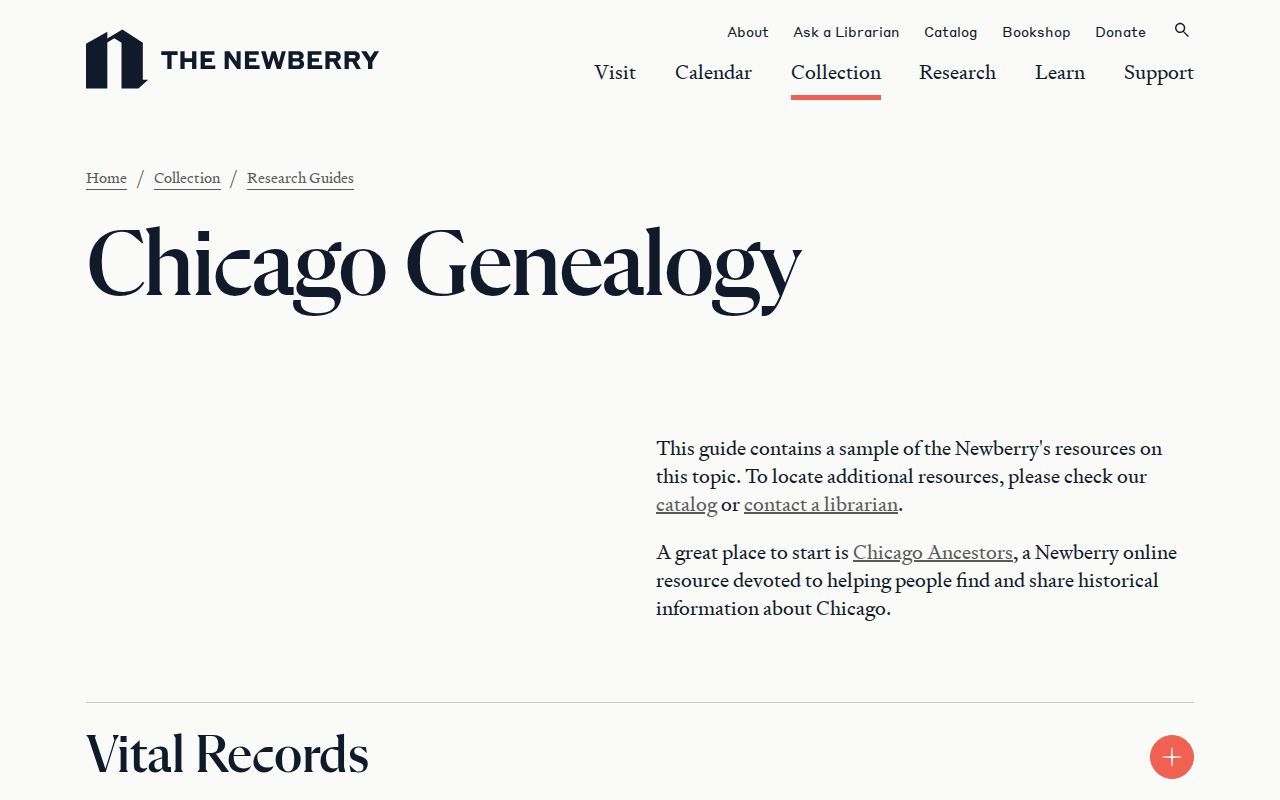
Inventory leads must be checked against the current shelf or reel before an edition is cited.
The collections and entry rules are treated on the Blue Island city directory page. The task here is movement through time at one parcel.
Blue Island Previous Residents in News
The Illinois Newspaper Project lists Blue Island Sun, Standard, Sun-Standard, Forum, Suburban Star, and Calumet Park editions. Several ranges contain literal “u” placeholders. Those are catalog gaps, not years to guess. SSGHS adds a Blue Island Sun obituary index for 1919 through 1969, funeral-home records, and a large regional cemetery index.
An obituary can link kin, an event date, a former address, or a later place. Probate may identify heirs or property, but it belongs to the Circuit Court route, not the vital desk. Search a precise name, date span, paper, and address, then inspect the page image. OCR and index spelling can fail, chiefly with initials, marks, and changed names.
Blue Island Previous Resident Building Files
Historic Preservation Commission files add a place layer. A landmark or district nomination, map, or certificate-of-appropriateness file may name an applicant, architect, owner, or exterior project. It can date a site change and point toward a permit, law, or meeting packet, but it is not a title history.
No public, complete Blue Island permit index by address was found. Contact Building Safety and Planning and Zoning at 708-597-8606, or make a date-bounded Illinois Freedom of Information Act request for an existing permit, inspection, map, or project record. Useful keys are address, PIN or R.E. Index number, work description, contractor, approval, and inspection date.
Verify Blue Island Previous Residents
A sound result says what each source proves. A deed ties named parties to a transfer. A city directory ties a printed person or firm to one edition. A census describes a household within its geography. A map describes the site. A tax mailing field names the bill's destination.
Keep a log with source, date, page or document number, old and new address forms, PIN, and each name's role. For pre-digital records, use the Clerk recordings desk, Cook County remote archive reference, IRAD, Blue Island Public Library, BIHS, Newberry, and State Library maps. Check current holdings and copy rules.
Use records with care. Researching previous residents fits family history, house history, and personal curiosity. Never use an address trail to track, harass, intimidate, or harm a living person.